Charactersthat work.For a living.

Designed as AI avatars, deployed as brand mascots and autonomous agents, and filmed in cinema-level content we make ourselves. One studio in Auckland. Three services.

Services

Brand mascot design and activation

A logo gets recognised.
A character gets remembered.

Twenty-five years of character design, pointed at your brand instead of someone else’s film.

In 1894 a tyre company built a man out of tyres. He’s still working. Mascots outlast campaigns, logos, slogans and most of the executives who approved them because a character is the only brand asset people develop feelings about.

The ones that last were never decoration. They had a temperament. You could guess what they’d say.

So that’s where we start. A discovery workshop with your team: the brand, the audience, what someone should feel in the first half-second of meeting it. Then research into who’s actually on the other side: their age, their culture, what reads as charming to them and what reads as trying too hard. A character that lands in Auckland and dies in Jakarta isn’t finished.

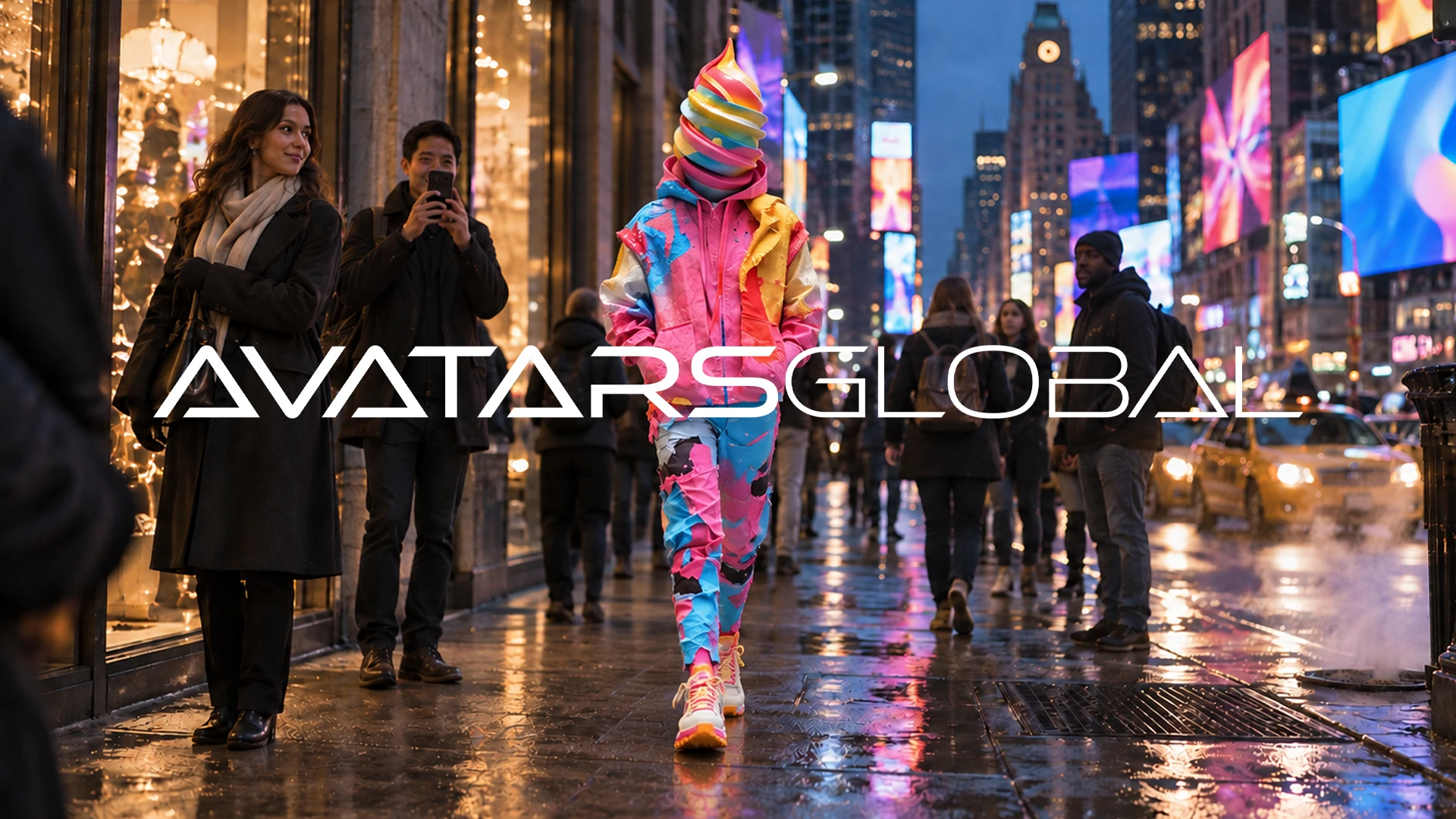
A colourful ice-cream character in Times Square beneath the Avatars Global wordmark

Only then do we decide what it looks like. Warm or sharp, calm or chaotic: temperament first, because the face follows from it. Everything after that gets specified and locked into a model sheet: expression, eyes, blink rate, texture, wardrobe. Same character on a billboard, in a film, and in three years’ time.

It shows up wherever you do. Packaging, campaign films, out of home, social, in-store screens, events.

And then the part a costume could never do: it talks back. Your mascot answers questions, runs the competition, remembers the regulars and can act on your systems while it’s at it. Thirty years of standing still, over.

Common questions about Brand Mascots8 questions

Can you use our existing mascot?

Usually yes, and most of this work starts that way. We build the voice, behaviour and conversational range around the character you already own rather than replacing it, so what people recognise from your packaging is what they meet online.

How do you stop it saying something off-brand?

Briefing and guardrails. The avatar is given what the character does and doesn't talk about; anything outside that is deflected in character or passed to your team. Sensitive subjects require a person to approve before it responds.

Who owns the character we create together?

You do. You own the intellectual property in the character we create together, the same as you own the rest of your brand assets. That applies whether we build it from scratch or develop it from a mascot you already have.

Does an interactive mascot still work after the campaign ends?

That's the main argument for one. A campaign mascot disappears when the media spend stops. An interactive one keeps answering, which is what turns a campaign audience into people who come back without being paid to.

Does a virtual influencer post on its own?

Within a calendar and guidelines you've approved. Routine posting and replying happen without you, anything sensitive waits for a person, and your team can see and stop anything at any point. It isn't left unattended.

Do we have to disclose that it isn't a real person?

Yes. Advertising codes in most markets require it, platforms increasingly require it, and audiences find out anyway. Disclosure costs nothing, people follow virtual characters knowing exactly what they are.

Can it handle comments at scale?

That's the main reason to have one. A post with four hundred comments usually gets a handful of replies because a human team runs out of hours. An avatar answers them all in character and passes abuse or complaints to a person.

What if it gets baited into saying something damaging?

It's briefed on what the character doesn't discuss, and it disengages rather than improvising. Anything outside its brief goes to your team instead of getting an answer. The failure mode is being boring, not being a headline.

AI content production studio

Made with AI. Made by people.
The difference is obvious.

A full production studio running an AI pipeline, which costs a fraction of a shoot and looks nothing like the rest of it.

You’ve seen the alternative. Smeared hands, dead eyes, a voice with no pulse. It’s cheap because nobody made a decision.

Here, somebody decides everything. The lens: eighty-five mil, which is why the background falls away. The key light, the rim light, the colour temperature. The felt on the wall, the grain in the timber, the weight of the fabric. Characters designed, not summoned. Sound composed and mixed for the cut rather than lifted from a library. A grade on every frame.

The voice is locked before a single frame is animated, phonetic spelling and all, so nothing gets remade over a mispronounced brand name. Then animators and cinematographers who came from film and games go through the result frame by frame and say what’s wrong with it. That audit is the step everyone else skips, and you can always tell.
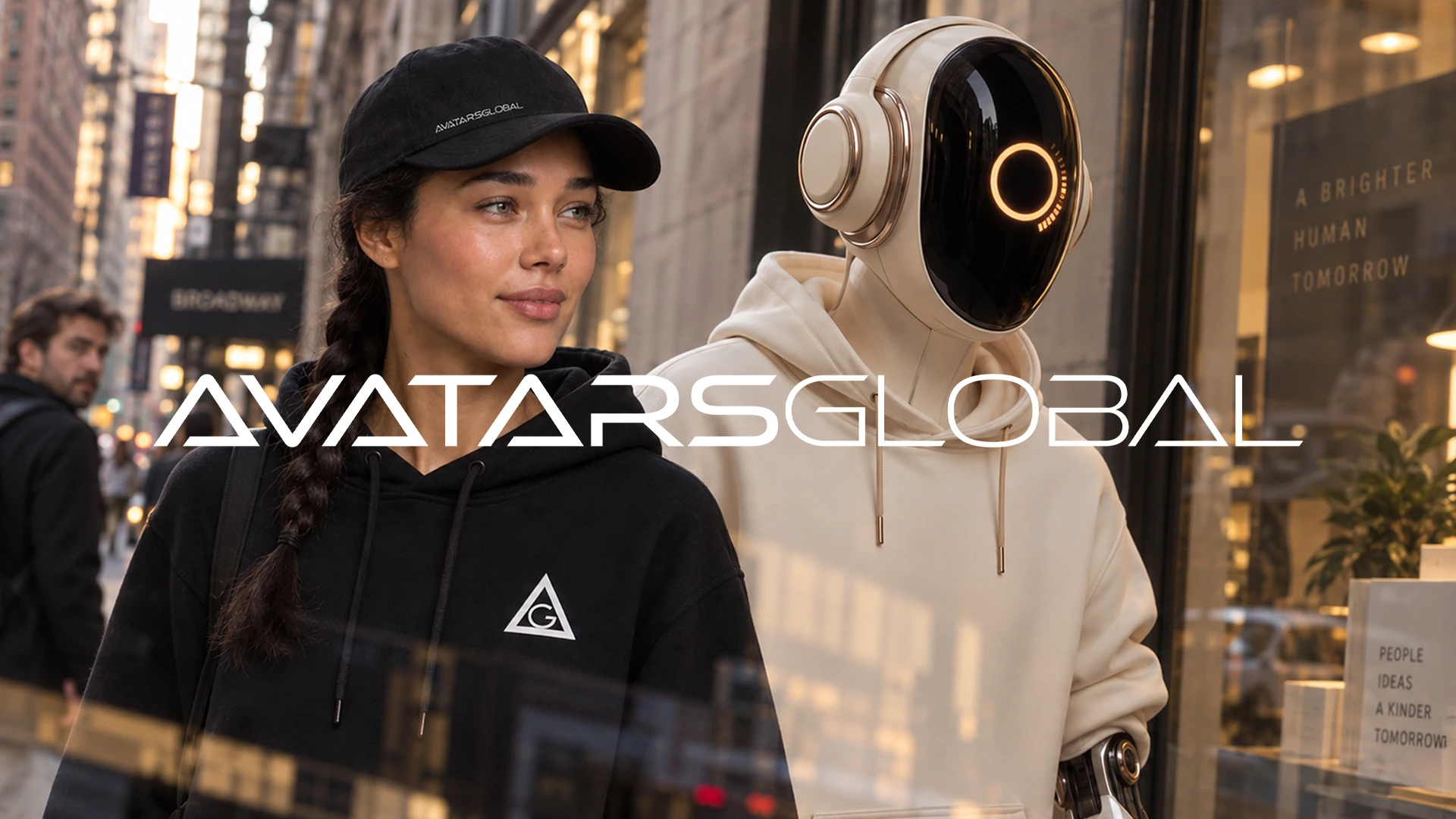
An Avatars Global character and a cream-coloured robot on a city street beneath the Avatars Global wordmark

What it’s for: campaign films, product explainers, onboarding and internal comms, launch content, social cuts, and the same thing again in seventy languages when you move into a new market.

You get every ratio rendered natively rather than cropped, captions or clean, and audio on its own if there’s a podcast in it. A script change means regenerating against what already exists, not booking a studio twice.

Cheaper than an agency. Unrecognisable from an AI one.

Common questions about Content7 questions

Is this AI-generated video, or real production?

Both, and the second part is what matters. The pipeline is AI-assisted at every stage, but it's run by directors, designers, animators and sound engineers who spent their careers in film and games. AI makes the fourth version affordable. People are the reason the first one is worth watching.

Can you work with assets we already have?

Yes, and it usually makes things faster. Existing characters, product photography, footage, brand libraries and sound all go into the pipeline rather than being rebuilt. If you own it, we'd rather use it than replace it.

Who owns the finished work?

You do. The films, the characters, the environments and the source files are yours, the same as with any production contract. We don't license your own campaign back to you.

How many languages can an AI presenter speak?

More than seventy. We use ElevenLabs for voice, which covers English, Spanish, French, German, Portuguese, Italian, Dutch, Polish, Arabic, Hindi, Japanese, Korean, Mandarin, Russian, Turkish and Vietnamese among others. Every one is checked by a native speaker before release, a fluent-sounding mistake in a market you don't operate in is worse than no video at all.

What happens when the script changes?

You send the new script and get new versions the same day, in every language. That's the real saving, not the first video, but the fourth revision of it, which traditionally means rebooking a studio, a presenter and an edit.

Can it use a real person's face?

Only with that person's written, informed consent, and with agreed limits on what it can be used for and for how long. Most clients find an original character simpler, because it doesn't leave when the person does.

Do viewers know it isn't a real person?

Yes, and they should. We disclose it, and in most markets some form of disclosure is either required or on its way to being required. Audiences mind being deceived far more than they mind an avatar.

Interactive avatars and AI agents

The ones that clock in.

An interactive avatar is a character your customers can talk to and that can act on your systems while it does.

Most people meet AI as a text box. An interactive avatar is the opposite: a face, a voice, a manner, and a job. It answers out loud, in character, reading from your own policies rather than guessing, and when it should, it does something about it.

That last part is the difference between an assistant and an agent. On AverCare, the avatar updates a patient’s calendar from inside the app, just by being asked. No form, no menu, no second screen.

Design matters here as much as anywhere. This is a character with a face and a manner, not a chat window with a picture on it. Same workshop, same model sheet, same discipline as the mascots.

And it knows where it stops. Anything outside its brief goes to one of your people with the whole conversation attached, so nobody has to start again.

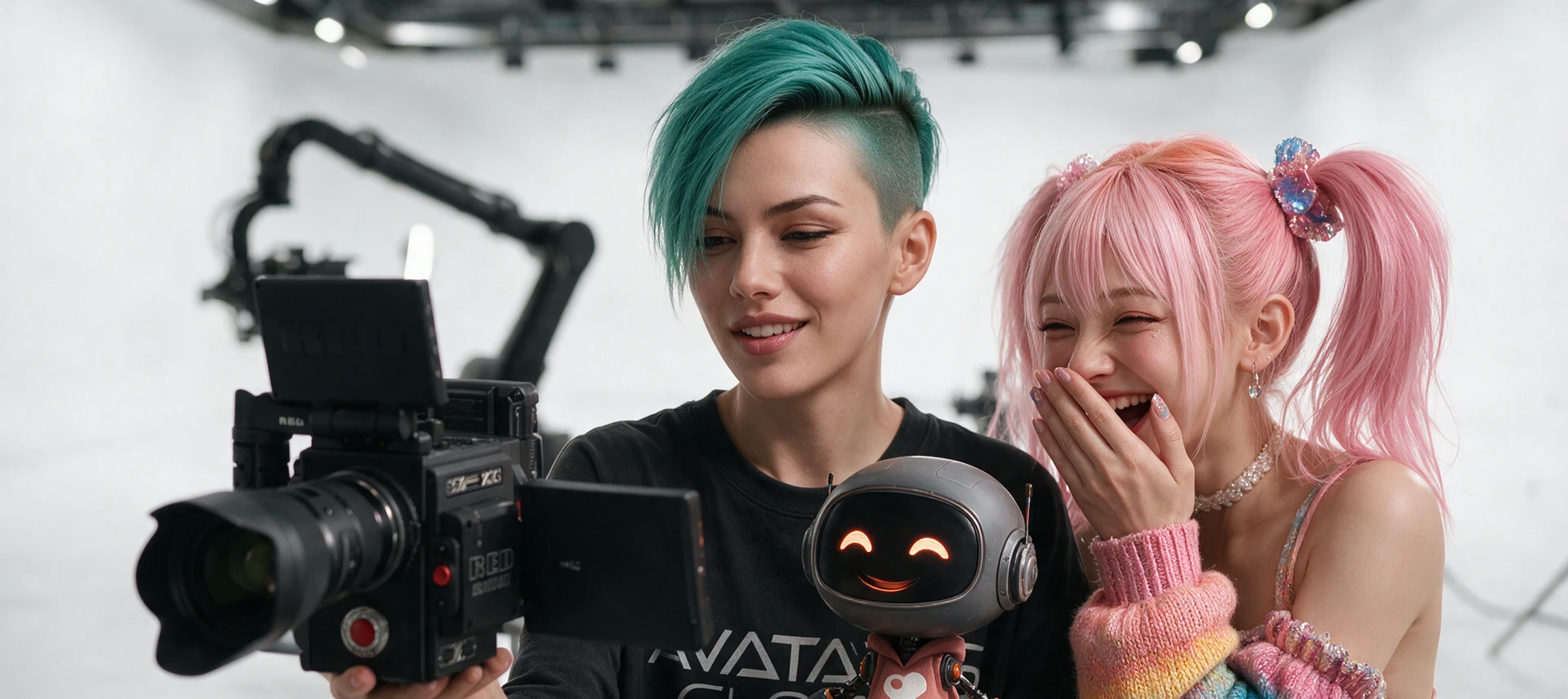
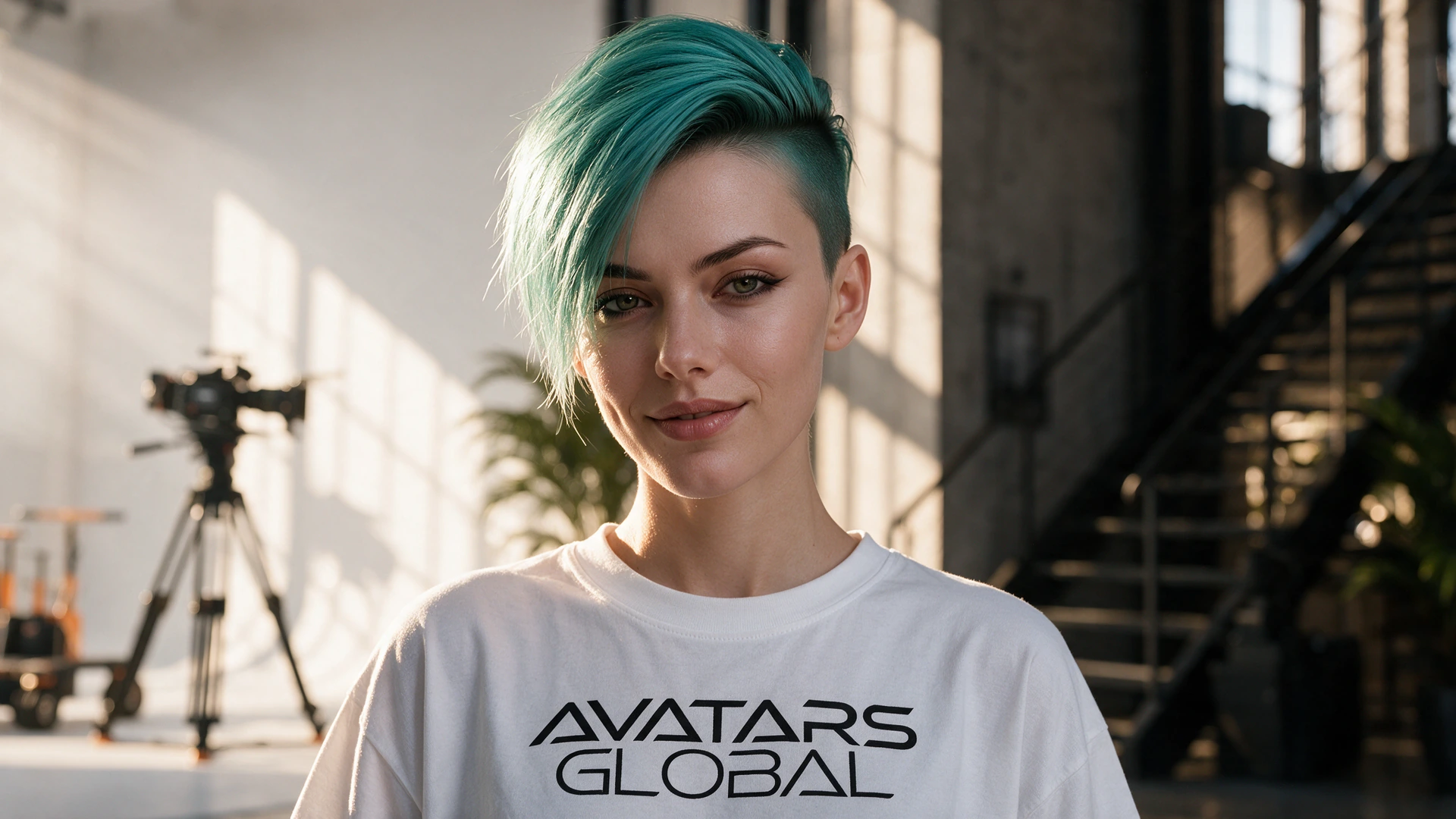
A teal-haired interactive avatar wearing an Avatars Global shirt in the studio
  • Customer support: the same forty questions, answered in seconds, at any hour.
  • Sales: narrowing a sixty-product range to the two that fit, then holding the basket.
  • Training: playing the difficult customer until a new hire stops flinching.
  • Education: explaining a concept eleven different ways until one lands.
  • Social: posting and replying in character, every day, including Friday night.
  • Presenting: fronting explainers and internal comms, in every language you sell in.
  • Acting as an agent: booking, updating, filing, triggering the thing that needs to happen next.
Common questions about Interactive Avatars12 questions

Can an AI customer service avatar connect to our helpdesk?

Yes. It reads from the same places your agents do, helpdesk, order system, CRM, knowledge base, and writes back, so a conversation it resolves appears as a closed ticket rather than a separate log nobody checks. Anything with an API can be connected.

Will it make up an answer if it doesn't know?

No. It answers from the material you give it and nothing else. When a question falls outside that, it says so and passes the conversation to a person, with the full transcript, so the customer doesn't have to start again.

What happens when a customer gets angry?

It hands over. The avatar is briefed to recognise frustration early and escalate to a human rather than keep trying, because a frustrated customer talking to software gets more frustrated. The transcript goes with them.

How long does it take to go live?

Weeks, not months. The timeline depends mostly on how many systems it needs to connect to, not on the avatar itself, a character answering from your knowledge base is quicker to stand up than one writing back into three of your systems.

How is this different from a chatbot or a product filter?

A filter needs the customer to already know the vocabulary, the size, the spec, the category. An avatar asks what they're trying to do and does the translating. It's the difference between a search box and a good salesperson on the floor.

Can it complete the sale?

It builds the basket and hands the customer to your existing checkout. It doesn't take payment itself, which keeps your payment flow, your fraud checks and your compliance exactly where they already are.

Does it connect to our stock and product data?

Yes, that's what stops it recommending things you can't ship. It reads live stock, sizes and delivery windows, so what it tells a customer matches what they'll see at checkout.

What stops it overselling to close a sale?

Rules you set. It can't discount without permission, can't promise a delivery date it can't see, and won't recommend out-of-stock items. An avatar that oversells costs you the return and the review, so the constraints are in your interest as well as the customer's.

Does an AI training avatar replace a trainer?

No. It replaces the part where there's nobody available to practise with. Your trainer still sets the standard, reviews the scoring and runs the session, the avatar just means a new hire can rehearse the hard call eleven times on a Tuesday instead of once a quarter.

Can it score against our own framework?

Yes, and it should. It marks against your rubric rather than a generic competency model, and a human signs off any score that goes on someone's record. Automated grading without review is a fast way to lose your team's trust in the tool.

Does it work inside our LMS?

Yes. It runs in the browser and reports completion and scoring back to your LMS, so training data stays in the system your HR team already reports from, no separate dashboard for someone to remember to check.

Are practice sessions recorded, and who can see them?

That's your decision, and worth making early. Sessions can be kept for coaching or discarded immediately. People practise more honestly when they know a bad attempt isn't going on their file, so we'd usually suggest keeping scores and discarding transcripts.

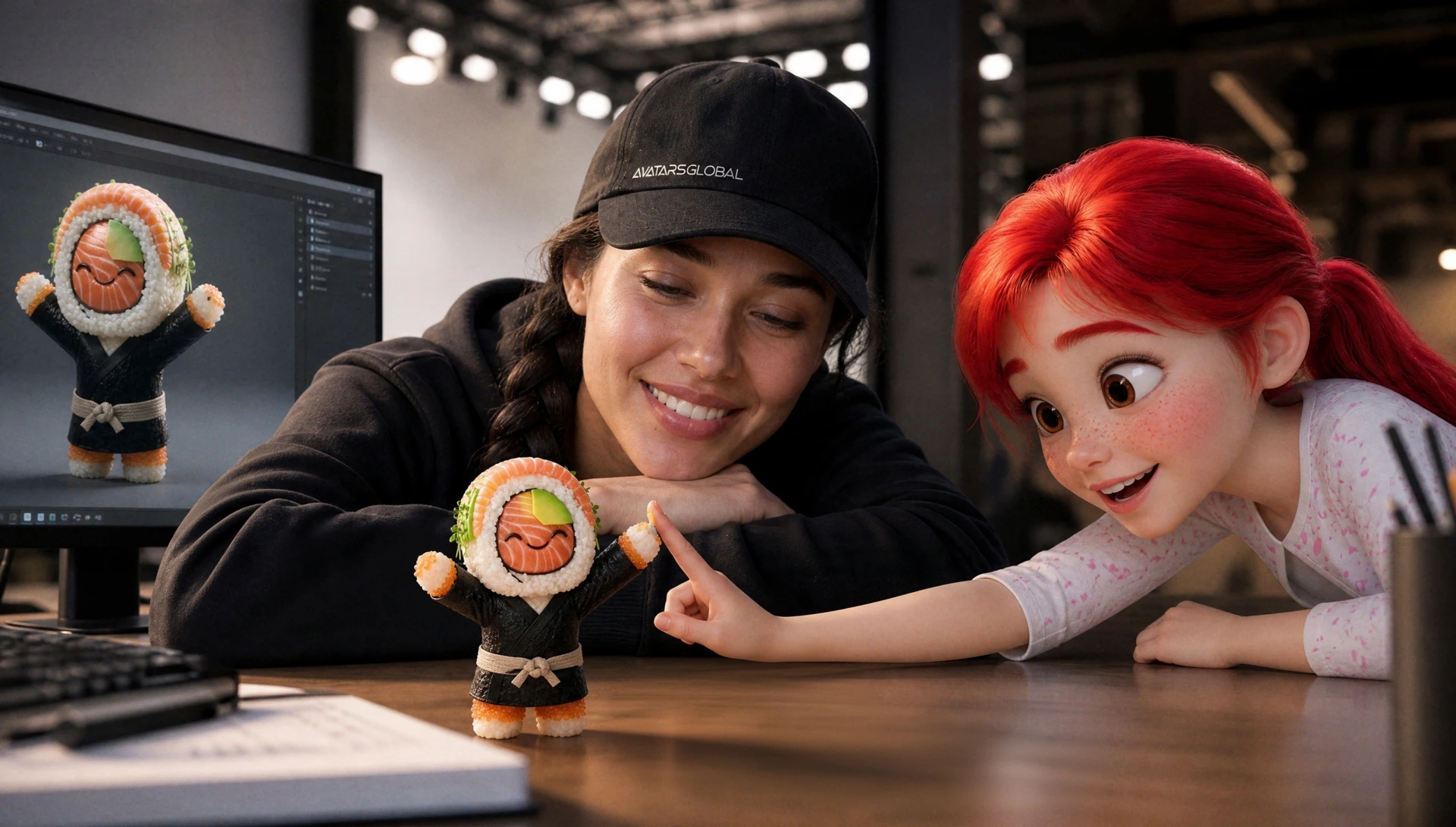
Avatars Global characters filming together in the studio

Spend less.
Look like you
spent more.

Fifteen minutes. Tell us what you’re making, who it’s for, and what it’s costing you now. We’ll tell you where we’d make a difference, or that we wouldn’t.

Meet the cast
There are real people on the other side.

Avatars Global film

15 MINUTES. A LITTLE POSSIBILITY.

Let's find
a time to talk.

Tell us when you're free. We'll confirm a time with you by email.

We'll use your details to arrange this conversation. Privacy policy